A pallet of used gloves does not look like a method decision, but for lots of plants it is exactly that. You can keep paying to landfill single‑use PPE, view disposal costs approach, and accept the reputational hit that features it. Or you can treat those exact same products as a managed possession. Over the last decade, I have actually dealt with laboratories, food processors, automotive settings up, and pharma facilities to move from offhand practices to closed‑loop systems. One of the most dependable gains come when operations teams, EHS leaders, and procurement align around one concept: waste is simply unmanaged product. Collaborations with programs like Libra PPE Recycling make that concept practical.
Why PPE belongs in a round plan
PPE is created to secure people, not to be source effective. Nitrile and latex gloves, sleeves, bouffant caps, and non reusable dress enter a center in bulk and exit in a stream that is scattered, infected at varying levels, and pricey to deal with. Yet the product composition is surprisingly tractable. Single‑polymer nitrile has a foreseeable thermal profile, latex is readily separated when appropriately sorted, and several handwear cover brands now disclose resin grades and fillers. That gives recycling partners area to designer repeatable procedures and create beneficial outputs.
Spend a day on a manufacturing flooring and you can see why this issues. A laboratory tech changes gloves twelve times in one change to stay clear of cross‑contamination. A food packaging line turns over entire glove boxes every changeover. A paint cubicle discards sleeves when moving between shade lots. None of these options are incorrect. They shield product integrity and worker safety. The problem is the default location. Conventional carrying funnels non‑hazard PPE right into blended municipal waste, where it grabs moisture and grit that make downstream diversion nearly impossible. Capture it at the point of generation, and you can keep a consistent stream suitable for handwear cover cleaning, mechanical recycling, or power recuperation, relying on the threat profile.
Libra PPE Recycling builds around exactly this home window: obstruct the stream early, use evidence‑based arranging procedures, and transform a price facility into a traceable, reportable materials program.
What a Libra collaboration appears like on the ground
Partnerships are successful or stop working in the details. The very first website walk I made with Libra's group at a midwest nutraceutical plant took two hours and three sets of shoe covers. We mapped glove adjustment points, observed how operators relocated between zones, and timed for how long it took to reach existing waste receptacles. Working from that easy research study, the plant changed six open bins with 3 color‑coded, lidded containers within arm's reach of the glove shelfs. The difference was immediate. Container pureness went from an assumption to a metric, and line leads can ultimately see where non‑compliant products were entering the stream.
A typical program adheres to a pattern that respects each facility's nuances:
- Baseline evaluation and pilot. Libra audits handwear cover usage by department, evaluates existing waste results, and flags any regulated waste. A 30 to 60 day pilot, ideally in 1 or 2 departments, confirms assumptions and informs right‑sizing for containers and pick frequency. Source segregation design. Containers and signs do the hefty training. Sites use easy shade and language hints, not plan binders, to lead habits. For example, blue containers for nitrile PPE only, yellow for blended PPE with low soil tons, red for anything that touched solvents or bloodborne pathogens. Safe handling and transport. Filled containers are secured and presented at a designated dock. Libra coordinates pick-ups with chain‑of‑custody monitoring and provides manifests. Their back‑end sorts and preprocesses the product for handwear cover cleaning or reusing into second products like industrial floor coverings and composite lumber. Feedback and optimization. Month-to-month reports reveal weights, contamination prices, and diversion percents by division. Sites can adjust container positioning, run micro‑training, or customize pick-up tempo to lower costs.
That rhythm matters since it sets guardrails for cross‑contamination avoidance. If your operators recognize specifically where to go down a handwear cover, and the container is always the same distance from the workstation, actions comes to be muscle mass memory. The program doesn't add actions to the work, it removes indecision.
Safety initially, always
EHS leaders are appropriate to question any kind of claim that non reusable PPE can be reused. The line in between non‑hazard and controlled waste is genuine, and mismanaging it runs the risk of individuals and permits. The liable technique begins with classification.
For most centers, PPE falls into three pails. First, clean offcuts and lightly stained gloves from dry operations, like assembly, assessment, and basic upkeep. Second, PPE with incidental call of non‑hazard food deposits, water‑based inks, or benign dusts. Third, PPE exposed to solvents, oils, hazardous reagents, or biofluids. Libra's program is constructed to approve the very first 2 classifications when a site's danger evaluations support that classification. The 3rd classification remains out of scope; it stays in managed waste streams with well-known handling protocols.
Glove cleansing systems are targeted at the very first 2 pails. They utilize controlled cleaning, drying out, and examination to prolong glove life for non‑critical tasks, such as training laboratories, upkeep stores, or low‑risk handling. When cleaning is not appropriate, mechanical size reduction and densification prepare the material for recycling. By maintaining the range clear, you prevent the catch of wish‑cycling. That honesty likewise helps train drivers. Individuals discover fast when the rule is basic: if it touched X, it goes in managed waste, not in the reusing container.
I've seen plants reduced contamination rates listed below 5 percent within 2 months just by aligning signs with work guideline language and adding a five‑minute tailgate talk. Not since employees didn't care previously, however because the target and the exemption were finally obvious.
The company instance that survives spending plan season
Sustainability jobs often stop working when they lean only on desire. Operations leaders fund what protects uptime, top quality, and margin. Libra's design meets those thresholds because the costs sit where the savings accrue.
Let's usage a conventional instance. A 200‑person facility utilizes roughly 2.5 million non reusable handwear covers annually. That equates to concerning 12 to 15 tons of material, relying on handwear cover thickness and size mix. If land fill disposal runs 90 to 120 bucks per lot plus transport and container leasing, yearly spend simply for handwear cover waste lands in between 3,000 and 5,000 dollars, usually higher when charges and haul minimums begin. Add soft prices from time spent switching overfilled containers and remediating container spills, and the picture gets worse.
Libra PPE Recycling shifts a section of that invest right into a taken care of service. Collection containers are right‑sized, transport is set up to avoid partial lots, and the product goes to a facility engineered for PPE streams. The worth is available in three layers.
First, avoided costs. Lower land fill tonnage, less pickups, and less contamination of your general waste https://felixmxsw217.theburnward.com/handwear-cover-cleansing-validation-ensuring-security-and-conformity lower invoices. Second, extended life. Where glove cleansing is sensible, you defer acquisitions for non‑critical tasks. Also a small 5 to 10 percent reduction in brand-new glove procurement pays for a piece of the program. Third, compliance and reporting. Exact diversion and cross‑contamination prevention information maintain auditors and consumers satisfied, which safeguards revenue.
Most partners want a fast method to model this. An ROI calculator that makes up glove spend, current waste costs, and program charges can reveal repayment durations in between 6 and 18 months. The huge swings originate from two variables: how well the center maintains container purity, and whether any type of portion of the stream gets approved for glove cleansing. If you build the program around the facts of your change patterns and item mix, the ROI numbers have a tendency to stick.
Practical layout, not perfection
I've enjoyed greater than one program stumble due to the fact that it attempted to be best on day one. The much better approach is iterative. Begin where misuse is reduced danger and quantity is high. Quality labs with dry operations are commonly suitable. So are production line where the only soil is dirt and dealing with oils. Once you see stable capture rates, migrate the design to adjacent departments.
A small story from a regional food co‑packer comes to mind. They insisted the sanitation crew would certainly never use set apart containers throughout over night clean‑downs. We parked one container at the leave of the clean‑in‑place area, 3 steps from the handwear cover shelf. The manager requested for a second container a week later, not because he loved reusing, but because the lidded devices reduced splashback and smell near the locker benches. The functional win made the environmental obligation seem like a byproduct, not a burden.
Another overlooked layout information is container quantity. Large bins invite combined waste. Better to use medium containers that fill up predictably during a change. Operators discover to seal and swap at break times, which keeps the area neat and avoids the last‑minute stuffed bin that compels a person to toss the overflow right into basic trash.
Quality of the recycled output
A fair inquiry: what happens to all that product, and is it actually valuable? When streams are tidy and mostly nitrile, Libra and its companions create pellets that feed into products like floor coverings, non‑critical gaskets, and composite accounts. Combined PPE streams are harder. They might end up in engineered fuel blends or composite products where mechanical homes can tolerate a heterogeneous input. The objective is not greenwashing. It is to push as much product into long lasting 2nd lives as the chemistry allows, and to be clear when energy recovery is the very best available option.
A few centers have sought top quality take‑back, where a section of their recycled PPE returns as floor mats or dock bumpers. That type of loophole has worth beyond optics. It requires tighter control over inputs, since nobody intends to put their name on a product with erratic top quality. The effect waterfalls upstream to better partition and cleaner bales.
Training that respects the job
Most hourly teams can identify a program created without them in mind. They see the added actions and the friction it develops. The training that actually works has 3 attributes: brevity, quality, and continuity.
Keep the initial session under fifteen mins. Program 3 example products that do belong in the container and 3 that do not. Reference the same language used in work instructions. If a driver's SOP calls a solvent by brand name, claim that name throughout training, not the generic chemical. Close with why it matters to them: less smell issues, cleaner workstations, and much less time handling messy bins.
Reinforce it with little touches. Sticker labels on handwear cover boxes that match the container color. A one‑page SOP addendum with 2 photos. A monthly note from the line lead that shows diversion rates in simple numbers, not bar graphes. Individuals respond to specifics, not slogans.
Cross contamination prevention is the backbone
Programs live or pass away by how they take care of edge situations. A glove is clean until it touches a solvent cloth. A sleeve is great up until a decrease of reducing oil lands. The simplest means to shield the stream is to manage the closeness of incompatible tasks. On an electronic devices line, relocating the adhesive station three feet far from the glove change point cut mixed waste by half. In a printing shop, including a disposable towel dispenser beside the solvent cabinet kept wiped handwear covers out of the blue bins.
On the backside, Libra depends on visual and sometimes spectroscopic checks to confirm stream pureness. They are not attempting to police your plant, they are safeguarding downstream purchasers. If contamination spikes, they do not simply turn down a lots without context. They send out pictures and notes so you can map the source. That feedback loophole is what makes it a collaboration, not a black‑box service.
Building a round economy version that fits operations
Circularity is a big claim. In method, it appears like well‑managed flows, clear data, and outputs that displace virgin materials. With PPE, the round economic climate version is not an excellent loop back to brand-new handwear covers. The polymer degradation and additive bundles make that impractical for now. It is, nevertheless, a loop that changes fossil‑based resins in non‑critical items, while reducing the overall volume of product leaving your website as trash.
A strong Libra PPE Recycling partnership normally includes three design options that reinforce circularity:
- Upstream purchase alignment. Systematize glove SKUs where possible. Fewer resin kinds enhance recycling results. If 2 service systems can settle on a nitrile spec, downstream handling gets easier. Data all set monitoring. Usage container tags and pick tickets that map to departments. When the ROI calculator reveals that Maintenance reduced contamination by fifty percent after a layout modification, you can spread out that layout to other zones with confidence. Incremental targets. Go for a clean 70 to 80 percent capture in year one rather than chasing after 100 percent. The last twenty points frequently require procedural modifications that are far better resolved as soon as the essentials are stable.
This version is not regarding excellence, it has to do with direction and proof. The information, not journalism release, maintains momentum.
Integrating handwear cover cleaning without jeopardizing safety
Glove cleansing makes a lot of interest since it assures immediate cost savings. It is likewise the area where judgment matters most. The best use instances are clear. Non‑critical jobs in upkeep, training, and some assembly locations can utilize cleaned gloves without influencing top quality or safety. The wrong usage cases are similarly clear. Anything involving clean and sterile fills, biohaz exposure, solvent handling, or great particle control must stay with new, licensed PPE.
A practical strategy is tiered use. Reserve new gloves for crucial operations. Transmit a part of clean, lightly made use of handwear covers via cleaning and redeploy them where threat is reduced. Track failure rates, tear incidents, and employee comments for those redeployed gloves. If a line lead reports higher tear prices, quit and examine. One plant saw a spike since a brand-new rack presented sharp sides during wearing. The repair was a rack swap, not a charge of cleaning.
The savings depend upon context, but also a slim redeployment can cut purchase. An university with 4 buildings cut brand-new handwear cover acquisitions by 8 percent over nine months while keeping high‑spec laboratories on brand-new PPE only.
Reporting that takes on scrutiny
Customers, auditors, and internal sustainability groups all want numbers they can trust. Libra gives weights, contamination rates, and personality classifications. Those categories ought to be plain: cleaned for reuse, mechanically recycled, energy recovery, residuals to garbage dump. Maintain the layout constant quarter to quarter so you can detect trends.
Pair those numbers with functional metrics. Track the number of containers were exchanged, the number of personnel educated, and any event reports connected to contamination. When you provide the program at a management testimonial, tie diversion rates to avoided charges and to any purchase savings from handwear cover cleaning. That placement maintains the program off the slicing block when budgets tighten.
Common mistakes and just how to prevent them
Three traps persist throughout websites. Over‑promising to the labor force is the first. If you state that every handwear cover will certainly be become a new item, operators will certainly discover the first time a container is rerouted due to contamination. Be straightforward regarding the pecking order: reuse if risk-free, reuse when possible, energy recovery when necessary.
The second trap is letting containers roam. When a cool set of three develops into a jumble throughout the floor, capture rates go down. Assign possession. Several plants allowed the five organizer or location lead very own positioning and appearance. A clean terminal signals intent and maintains non‑PPE trash out.
The 3rd trap is disregarding purchase. If one department demands a vinyl glove for a task that can make use of nitrile, you introduce a brand-new product that lowers downstream worth. It is not regarding dictating choices, it is about putting the reusing ramifications on the table when specs are set.
Why teams stick with it
Sustainability tiredness is genuine, yet individuals reply to programs that make their work cleaner and less complex. A device driver that no longer needs to fish a glove out of a half‑open trash bag appreciates the modification. A laboratory manager that can draw a report that pleases a consumer audit without days of prep appreciates it also. When a companion like Libra connections those useful success to a clean data path, the program stops feeling like a side project and becomes part of just how the plant runs.
There is also an abstract advantage that turns up in small moments. Throughout a Gemba stroll at a beverage center, a driver indicated the PPE container and said, We finally quit suggesting concerning where this goes. That sentence holds extra worth than any type of poster. Friction is the covert expense in every process. Remove it, and efficiency follows.
Getting began without stalling
If you are considering a collaboration, begin with 3 activities this quarter. First, quantify glove usage by division making use of purchase information and a quick count at factor of use. Second, stroll the flooring and determine the 3 most rational container areas, asking operators where they would certainly choose to throw out made use of PPE. Third, run the numbers with an ROI calculator with conservative presumptions, then welcome Libra to validate them during a website check out. If the version looks weak, adjust the extent. Start smaller sized. If it looks solid, set a pilot objective with one clear success statistics, like contamination rate under 10 percent at 60 days.
Momentum issues greater than an excellent strategy. The plants that move product out of waste streams do so because they give their groups a straightforward target, good devices, and timely responses. Libra PPE Recycling straightens keeping that rhythm, providing the infrastructure and data to turn PPE from an unavoidable headache right into a managed loop.
The wider photo, kept honest
Waste decrease is both sensible and symbolic. Practical, since disposal charges, flooring room, and driver time are limited. Symbolic, due to the fact that employees and clients read your options as a signal of what the company worths. A circular economic situation version for PPE does not fix every sustainability difficulty. It does, however, take an ubiquitous, noticeable material and path it with intent. When that directing comes with cross‑contamination prevention, handwear cover cleansing where appropriate, and reputable coverage, it makes trust.
Partnerships work when both sides protect each various other's restraints. Facilities require safe, certified, low‑friction procedures. Libra requires constant feedstock and predictable logistics. Meet in the center with clear extent and iterative improvements, and the landfill pile starts to shrink. That pallet of used gloves becomes one more flow you can guide, measure, and improve, not an enigma price you tolerate.
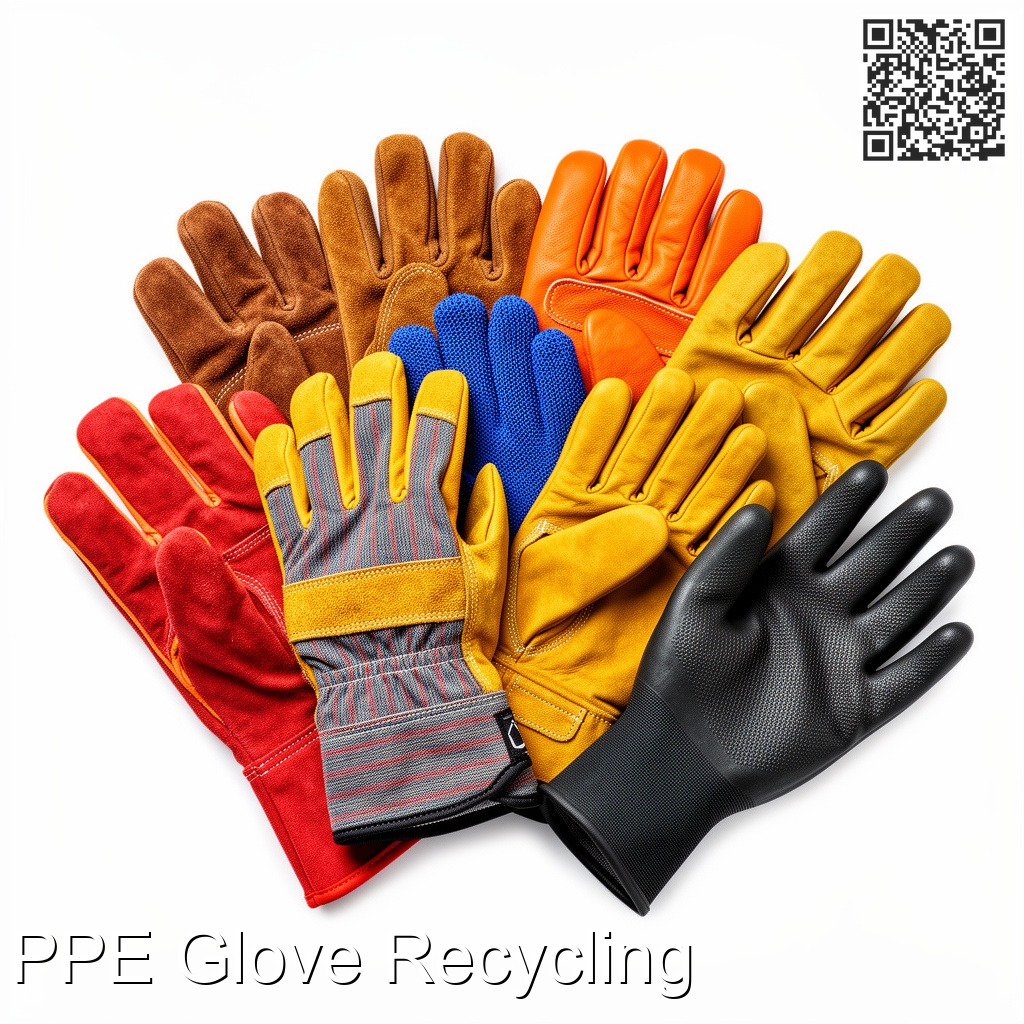
The win is not fancy. It resembles neat containers, less pick-ups, a lighter waste expense, and a report that makes your following consumer audit a non‑event. For many plants I have actually offered, that is exactly the type of development that sticks.
Libra Industries Inc
1435 N Blackstone St, Jackson, MI 49202
+15177875675
| Place ID | ChIJt_HMH44vPYgRNbiD22DpHYo |
| CID | 9952367353767639093 |
| Business Profile ID | 6301257705288912858 |
7H9Q+2G Jackson, Michigan
| Coordinates | 42.26760060, -84.41112540 |
 Ask ChatGPT
 Ask Grok
 Ask Perplexity
 Ask Claude
 Ask Google AI
 Ask You