Workplaces that count on personal safety tools generate a silent hill of waste. Gloves, sleeves, and disposable clothing maintain individuals safe and procedures tidy, yet the majority of it departures the building headed to a dumpster. For years that really felt inevitable. PPE was cheap, disposal was simple, and waste was a line item hidden under basic procedures. The business economics have actually changed. So have assumptions around ecological obligation. Many safety and operations teams currently ask a sharper inquiry: does a glove's life actually require to finish after one use?
I have actually set up PPE programs in food plants, labs, and light manufacturing. The distinctions in between a well-run recycling stream and business‑as‑usual landfilling turn up not just on a sustainability control panel, but on filling docks, in storage places, and on annual report. This review takes a look at the functional trade‑offs of sending out product to garbage dump versus embracing a closed‑loop program like Libra PPE Recycling. We will concentrate on PPE gloves first, since they dominate volume and danger, then broaden to system impacts like labor, cross-contamination prevention, and information exposure. Along the way I will use conventional numbers and flag where site conditions turn the result.
What winds up in the container, and how much does it cost?
Walk your center with a scale and inquisitiveness. Most sites that think of PPE as minimal are amazed. A mid‑size facility with 250 operators running two shifts can quickly undergo 15,000 to 30,000 non reusable PPE gloves per week, depending on job modifications and breakage prices. That translates to roughly 250 to 600 extra pounds of glove waste weekly, considering that nitrile and latex gloves consider regarding 3 to 5 grams each. Add sleeves, bouffants, and booties, and the number climbs.
Landfill disposal prices look uncomplicated. You spend for linings, compactor service, and tonnage. Real all‑in disposal frequently ranges from 60 to 120 dollars per bunch, but what generally conceals is the expense of inadequacy. Half‑full dumpsters, off‑spec loads rejected in the nick of time, spill clean-ups, audit time invested validating waste techniques, and the premium you quietly pay when waste handlers identify a lots as contaminated. If you operate in a state or county with hostile diversion targets, contamination charges prevail and seldom forecasted.
When teams shift to a reusing program designed for PPE, they see new line products: program costs, special collection boxes or carts, training time, and routine audits. Libra PPE Recycling typically costs per extra pound or per container, with quantity tiers. The error is to contrast the invoice alone and disregard avoided costs. Lots of websites that embrace a circular economic climate design for PPE gloves also utilize an ROI calculator to include lowered land fill draws, less compactor hauls, and material rebates or credit histories when recouped polymers are remanufactured. The mathematics does not always land on the exact same side. Chemistry labs with small quantities and non‑recoverable residues may have a hard time to validate a full program across all PPE. High‑throughput food plants commonly see payback in months, not years.
What occurs to the handwear cover after use?
The physical story matters. In a garbage dump, nitrile and latex gloves being in a low‑oxygen atmosphere. Nitrile is an artificial rubber. It does not biodegrade promptly, and in modern-day lined garbage dumps that is partially the point. Control is the strategy. Decomposition produces methane, a powerful greenhouse gas. Numerous garbage dumps capture methane for power, though capture prices differ. The handwear cover's worth is gone. It becomes a perpetual obligation taken care of by the municipality.
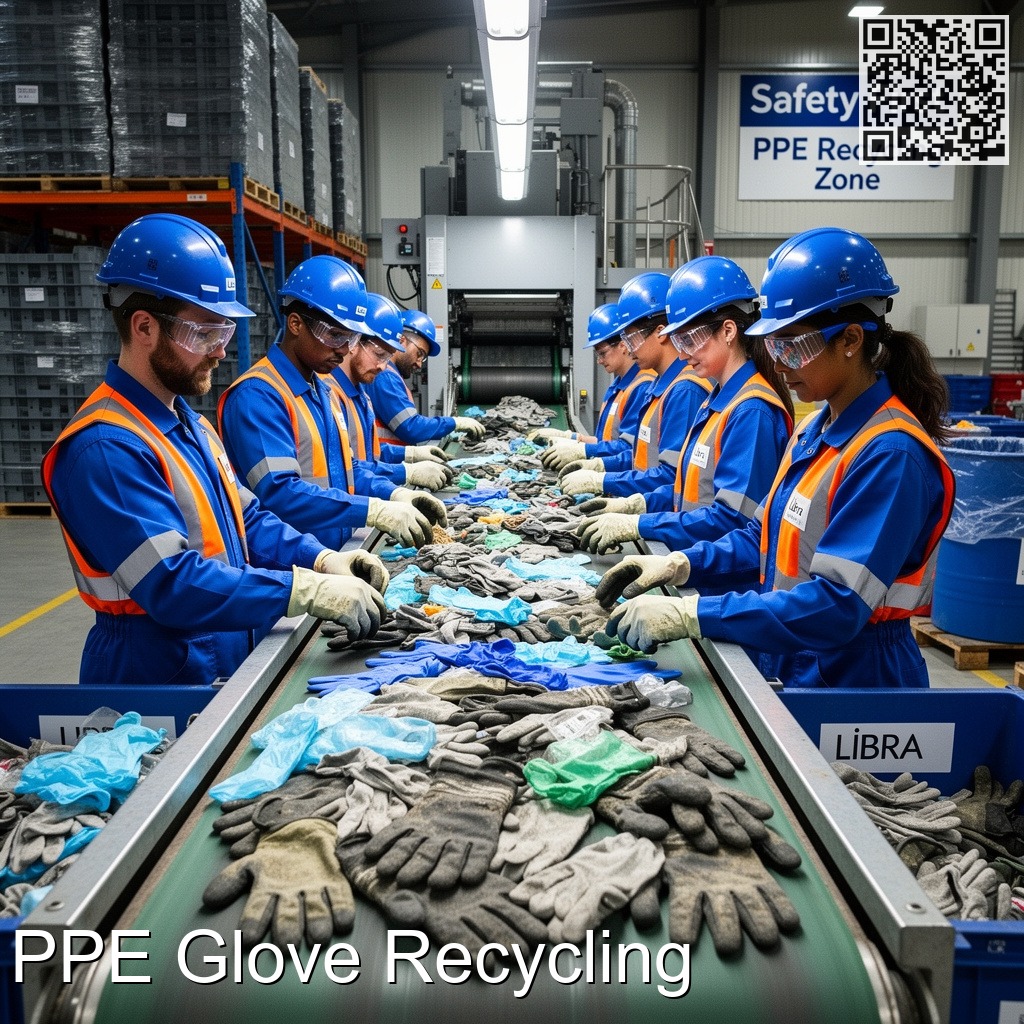
In a purpose‑built recycling stream, PPE gloves are aggregated, examined, and refined. Libra PPE Recycling obtains sorted PPE, shreds and washes it, after that transforms it right into a pellet or flake suitable for remanufacture. Nitrile and a few other elastomer blends can be worsened right into items like resilient mats, containers, or composite components that do not require virgin‑grade mechanical properties. The round economic climate version is imperfect here. No person is https://www.tumblr.com/grandzombietribute/807076252598108160/handwear-cover-cleaning-vs-disposal-the-roi-and turning a nitrile handwear cover back right into a medical‑grade handwear cover at scale. The win is downcycling right into useful, long‑lived goods and displacing virgin plastics. If a site has on‑premise needs for the remanufactured products, the loop tightens, and procurement gets a noticeable story to match sustainability claims.
Glove cleansing seems attractive, and in certain controlled procedures, cleansing and recycling heavy‑duty reusable gloves is sensible. With thin disposable handwear covers, cleansing for reuse seldom functions outside of extremely certain circumstances because thin movies weaken and take the chance of microtears. The smarter path is to clean and sanitize just where the PPE was planned to be multiple-use from the start, and to maintain disposable PPE in the reusing stream after single use.
Safety first: cross‑contamination isn't negotiable
Any PPE program lives under the umbrella of cross‑contamination prevention. In food and pharma, a glove failing or a contaminated handling action can compel a batch recall. In electronics or accuracy setting up, it can present issues. The argument I listen to most is straightforward: if we change taking care of for end‑of‑life, do we enhance cross‑contamination risk?
The solution depends upon container style and personnel behavior. Land fill containers are commonly open top or lined drums, placed conveniently yet inconsistently. Employees toss PPE in while scooting. If the bin overflows, waste spills. Recycling programs like Libra PPE Recycling use secured containers with one‑way ports, frequently color coded and positioned next to handwash or gowning stations. Lid geometry issues. A correctly sized aperture allows a gloved hand to go down waste without massaging the edge. Linings are swapped on time, not just when full, to stay clear of bulking concerns. In food plants I favor wall‑mounted boxes near leave doors of controlled areas, with a necessary glove‑off, handwash, brand-new glove series printed at eye level. That little choreography reduces cross‑contact risk while making the recycling actions the default.
For centers taking care of biohazards or solvents, not all PPE qualifies. Anything filled with hazardous materials continues to be regulated waste and must follow the more stringent path. Partial streams still make good sense. Separate uncontaminated PPE gloves from unsafe items. Most teams over‑classify at first. A fast workout assists: collect a week of waste by area, log the jobs performed, then run a compatibility display with the recycler. You will normally locate huge pockets of tidy PPE, particularly from changeouts where handwear covers are exchanged between jobs for top quality factors instead of due to the fact that they touched a hazard.
Carbon math without hand‑waving
Quantifying greenhouse gas savings is tricky, but directional declarations can still be grounded. An extra pound of nitrile diverted from garbage dump stays clear of a share of garbage dump methane and displaces a fraction of virgin plastic manufacturing. Released lifecycle analyses for plastics differ, yet a conservative general rule for mechanical recycling credit scores sits around 1 to 2 kgs of CO2e prevented per kg of plastic when contrasted to making virgin material and landfilling the waste. Nitrile's specific chemistry shifts the number, and transport ranges move it again.
For a center drawing away 20,000 extra pounds of PPE gloves annually, even a careful debt of 0.8 kg CO2e per kilo recommends roughly 7 to 8 statistics tons of CO2e avoided every year. That is not a silver bullet for a website's impact, however it is real, countable, and commonly among the simpler decreases to record. Libra PPE Recycling sustains reporting with batch weights and certifications of diversion so sustainability groups can straighten their audit with corporate methods. The audit trail issues when clients request for proof, or when a corporate ESG record needs third‑party documentation.
Dollars, time, and the ROI calculator
Financial leaders desire clearness. A line manager might see fewer dumpster draws. A sustainability manager sees diversion prices climb up. The CFO wants an ROI that makes it through scrutiny. The most basic way to anchor the discussion is to run scenarios making use of an ROI calculator that weds disposal prices, program costs, and labor effects. A normal input set appears like this:
- Monthly PPE glove consumption, by type and ordinary weight Current land fill or controlled waste price per load, inclusive of hauls and fees Estimated contamination charges or declined lots per quarter Internal labor for waste handling and training Program charges for Libra PPE Recycling, consisting of container leasing or purchase Material credit reports or discounts for recuperated plastics
On the first pass at 2 consumer goods plants, one in the Midwest and one on the West Coast, both at about 400 employees, the calculators delivered various solutions. The Midwest site had reduced land fill tipping charges and longer transportation to the recycling cpu, so straightforward payback had to do with 18 months. The West Shore site paid greater land fill rates, dealt with more stringent diversion mandates, and had a neighborhood remanufacturing partner getting the pellets. Payback landed under eight months. Both sites moved on, yet with various roll‑out extent. The Midwest plant started with 2 high‑volume lines and included others once the process maintained. The West Coast plant implemented throughout the board and renegotiated its landfill service agreement to reflect reduced volumes.
The blunder to stay clear of is treating the calculator like a one‑time gate. Update it after the initial quarter with real weights, real service periods, and any kind of missteps you found. The 2nd run is often extra positive due to the fact that you cut waste from the process itself.
Logistics that make or break the program
Successful PPE gloves recycling rest on easy positioning and predictable flows. The most effective programs look monotonous since they run on practices. A couple of operational information help:
Container capacity and spacing. If employees stroll greater than 15 to 20 steps to a container, they will certainly pick the nearest trash can. For huge rooms, setting containers at all-natural change factors, not simply departures. Believe handwash sinks, gowning benches, and active ingredient hosting areas.
Clear labeling. Use huge, simple language tags and a sample glove attached to the bin. Words like PPE gloves recycling, nitrile handwear covers just, and no wipes make clear intent. Photo help multilingual crews.
Service tempo. Libra PPE Recycling services on time or by sensing unit, relying on container style. If your procedure has heights, request for a versatile pick-up home window throughout transitions or pre‑audit weeks. Overflow is the opponent. Workers will certainly not arrange into a complete container.
Training in mins, not hours. New work with alignment can strike the fundamentals in five mins: why we separate PPE, what goes in, what does not, and the repercussion of contamination. Supervisors must refresh in everyday huddles during the initial month.
Contamination playbook. Expect blunders. Somebody drops a coffee cup or a rag into the bin. Make a decision ahead of time when to remove a bag and when to pick a few items with tongs. A simple threshold, such as greater than three non‑PPE products sets off cleanup, prevents arguments.
Quality and distributor implications
Procurement groups in some cases fret that presenting a reusing program will certainly secure them right into certain PPE SKUs. In technique, that rarely occurs. Libra PPE Recycling publishes approved products listings by polymer and by normal product groups. Most mainstream nitrile PPE gloves qualify, and the program can fit blends if identified.
Where you might want to systematize is on color or packaging. Standard shades enhance arranging precision on the floor. Packaging that uses less film or includes recycled material pushes the life process in the right instructions without altering employee actions. If you have several handwear cover suppliers, combine to fewer where possible, if only to smooth communication and streamline screening for recyclability.
One subtle advantage that shows up with time is quality comments. When you collect PPE gloves in committed containers, you see failing modes. A spike in thumb blowouts on Line 3 appears as a stack of left handwear covers with the exact same tear pattern. That is an acquiring conversation and a prospective adjustment to glove size or thickness for that task. Land fill containers hide these clues.
Compliance and perception
Auditors and client site visitors notice where your waste goes. A classified reusing program for PPE signals regulate, not just virtue. In managed atmospheres, you will certainly need a proof. Libra PPE Recycling supplies documentation on handling, transport, and handling. Maintain a binder or electronic folder that consists of acceptance lists, manifests, and certificates of reusing. When website inspectors ask how you avoid cross‑contamination, show container placement maps and cleansing methods. It is less complicated to protect a created system than a hasty jumble of trash cans and signage.
Public assumption carries weight too. Staff members really feel much better when they see their daily routine attached to ecological duty. Numerous plants employ in your area. Neighbors drive previous your dumpsters and vehicle bays. A noticeable reduction in land fill pickups and a tale regarding round economy practices plays well in area conferences and hiring conversations. This is soft value until you lose a prospect due to the fact that your facility looks careless. I have seen it happen, specifically with more youthful technological staff.
Edge situations and where land fill still makes sense
No single service fits every corner of a plant. A couple of situations favor the landfill or controlled waste course:
Microbiology laboratories with constant contact with biohazards. Even if your gloves are not visibly polluted, your danger position might require treating all PPE as biohazard. Emphasis your recycling on surrounding assistance locations like product packaging or warehousing.
Solvent and oil exposure in maintenance bays. Handwear covers with significant hydrocarbon absorption can foul a reusing stream and may require power healing or managed disposal.
Low volume satellite sites. If an area produces less than 50 extra pounds of appropriate PPE monthly, logistics expenses may surpass advantages. Combine at a regional hub if your procedures allow it. Some companies start reusing at big websites and backhaul tiny website PPE on existing products lanes.
Severe room restrictions. If you can not fit committed containers without going against egress or GMP spacing, do not force the concern. Remodel the area initially, after that try again.
None of these are irreversible blockers. They indicate the value of piloting by zone and developing out where the physics and danger account operate in your favor.
Data that gains its keep
One perk of an official program is the data it creates. With garbage dump, you commonly get a regular monthly tonnage and a hauler billing. With PPE recycling, you get weights by pick-up, occasionally by area if you segregate containers, and contamination notes when loads are off specification. That granularity lets you run little experiments.
Two beneficial ones:
- Shift comparison. Gather PPE individually by change for 2 weeks. If one shift generates 20 percent a lot more waste with similar output, dig into job techniques. You might locate extra constant glove adjustments as a result of small handwear covers or a task sequence that compels extra donning. Material test. Examination two handwear cover brand names for a month each, exact same rate variety, and track breakage and changes per hour. Element disposal and recycling weights. A handwear cover that sets you back a fraction a lot more per instance might produce less modifications and lower waste, which boosts both expense and environmental performance.
These exercises develop a responses loop between security, high quality, and procurement. They likewise make your ROI calculator extra truthful due to the fact that you are utilizing site‑specific actions as opposed to magazine specs.
Practical steps to get started
If you make a decision to check out Libra PPE Recycling, maintain the rollout simple and practical.
- Pick two to four zones with clean, high‑volume PPE gloves use and steady jobs. Avoid the messiest areas initially. Map existing container locations, then change just what you need to develop a clear course for workers. Do not get rid of every wastebasket on day one. Run the program for 8 weeks. Action extra pounds accumulated, contamination occurrences, and any type of cross‑contamination worries. Capture pictures of arrangement and normal containers for training. Update your ROI calculator with the real numbers. If payback looks excellent, expand to adjacent zones. Otherwise, diagnose traffic jams in positioning, labeling, or service cadence. Share the story internally. Post a straightforward graph in the break area revealing pounds drawn away and what those extra pounds came to be after handling. Individuals are more constant when they see the outcomes.
What changes on the floor
When a reusing program develops, the floor looks different. Gowning areas feel much less chaotic due to the fact that containers sit specifically where hands move. Supervisors stop going after overflow and spend that time on procedure checks. New hires discover the flow in their first hour and do not improvise. Purchase orders for PPE become a regular monthly discussion, not an emergency situation shuffle, since you see patterns in the waste stream and strategy accordingly.
The landfill service agreement likewise alters. You work out for less hauls and a rate that matches actual usage, not the legacy timetable. Some haulers push back. Bring your weights and pick-up logs. Program them the decreased quantity. Positive side: numerous haulers appreciate trusted projecting and will adapt to retain the account.
From a risk perspective, the clearest win is less arbitrary containers that act like contamination magnets. When every PPE change ends in the very same motion toward a sealed container, your false positives in swab examinations and your near misses out on throughout audits typically decline. That is not magic, it is human elements. A well-placed container defeats a lecture every time.
Landfill versus Libra PPE Recycling, summarized in practice
If I strip this down to what issues in day‑to‑day procedures, the contrast resembles this in ordinary language. Land fill is basic to start, cheap theoretically, and undetectable till it is not. You pay to bury value, you obtain little information back, and you approve a background level of mess and uncertainty that appears at uncomfortable moments. Reusing with a companion like Libra PPE Recycling is a lot more structured. You spend time in arrangement, you educate, and you take care of a new vendor connection. In return you get quantifiable diversion, a tighter tale for consumers and auditors, and a chance to improve glove selection and use by enjoying what you toss away.
It is fair to claim not every handwear cover ought to avoid the garbage dump. Unsafe exposures and tiny stations will certainly remain exemptions. Yet throughout many tidy manufacturing, lab support, storehouse, and packaging atmospheres, the equilibrium pointers towards reusing when you run the numbers and focus on flow. The ecological responsibility you can claim is grounded: details pounds drawn away, certain products made from your waste, and a circular economic climate version that a minimum of closes the loophole partway. That is a much better story than aspirational mottos, and it holds up when a client's high quality designer walks your line and asks where all those blue gloves go.
The last word belongs to the people putting on the PPE. If the program appreciates their time, decreases mess, and maintains them secure, they will do their part. You will see it in cleaner adjustment locations, steadier supply, and a waste dock that looks a little less like an afterthought. From there, the benefits substance. You begin to take on sleeves, after that masks, then the odd products that used to be no person's issue. You relocate from response to style, which is where excellent procedures live.
Libra Industries Inc
1435 N Blackstone St, Jackson, MI 49202
+15177875675
| Place ID | ChIJt_HMH44vPYgRNbiD22DpHYo |
| CID | 9952367353767639093 |
| Business Profile ID | 6301257705288912858 |
7H9Q+2G Jackson, Michigan
| Coordinates | 42.26760060, -84.41112540 |
 Ask ChatGPT
 Ask Grok
 Ask Perplexity
 Ask Claude
 Ask Google AI
 Ask You